Height Rules Guide
Technical reference covering height thresholds, accompanied bands, advisory conditions, and boarding eligibility criteria at European theme park attractions.
Contents
Overview of Height-Based Eligibility
Height requirements at European theme park attractions serve as a primary safety filter at the boarding gate. Operators establish minimum height thresholds based on restraint system geometry, g-force profiles, and seat design parameters. These thresholds determine whether a guest may board an attraction independently, only with adult accompaniment, or not at all.
Most European parks publish their requirements in centimetres. Common minimum values cluster at the following reference points: 90 cm, 100 cm, 110 cm, 120 cm, 130 cm, 132 cm, and 140 cm. Thresholds above 140 cm are rare and typically apply only to a small number of high-intensity launched coasters.
Articles published on this website summarise publicly available information, industry research, and educational materials.
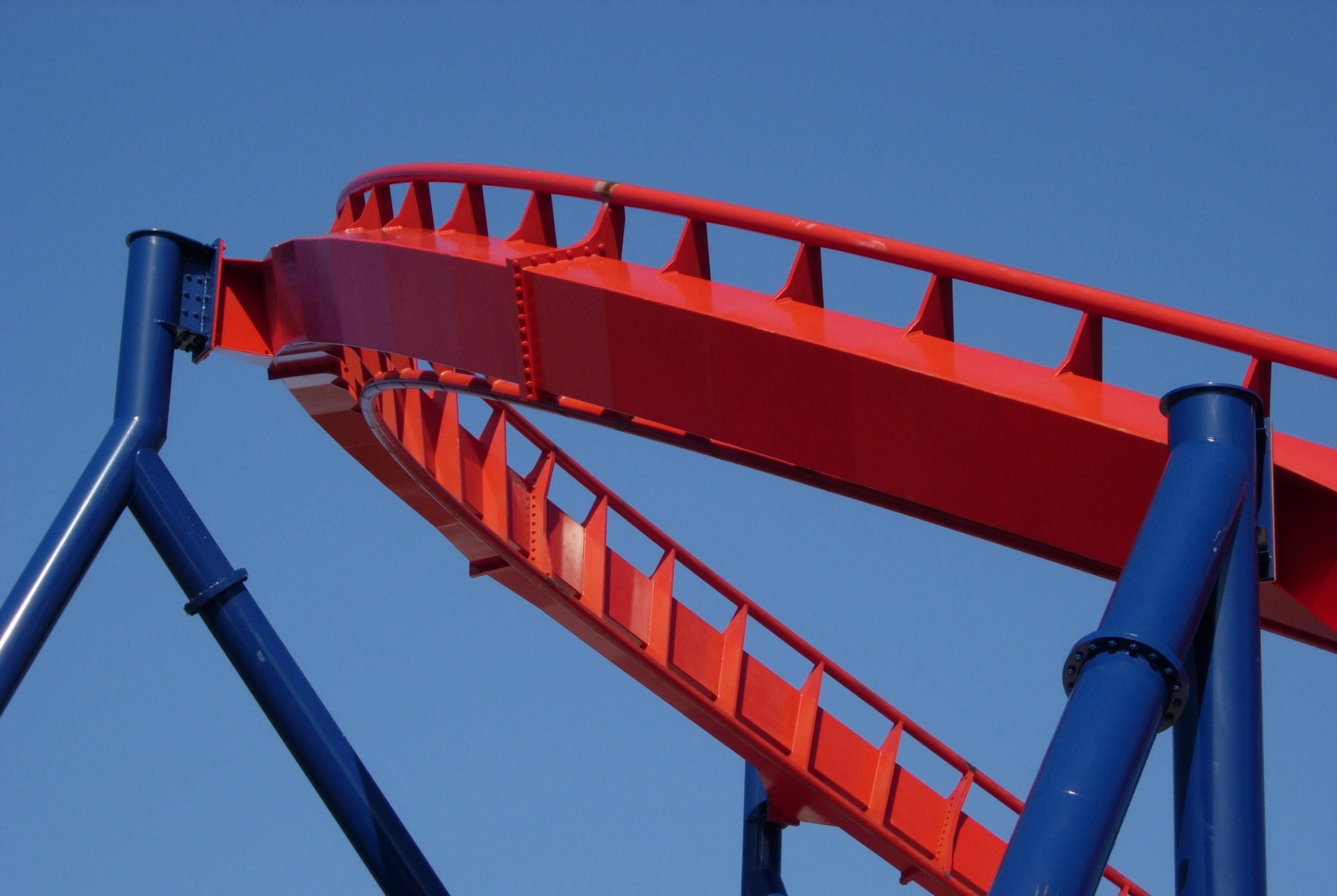
Coaster and Thrill Ride Categories
Attractions in European parks fall into broadly recognised categories, each carrying a characteristic height band.
Family Coasters
Family coasters are designed to accommodate guests across a wide height range, including young children when accompanied. Minimum heights typically start at 90 cm, with unaccompanied boarding permitted from 120 cm. Restraints are typically lap-bar or over-the-shoulder in a lower-force configuration.
Thrill and Inverted Coasters
Standard thrill coasters — defined as rides with significant positive and negative g-forces but no full inversion — commonly require a minimum of 120 cm, with unaccompanied eligibility from 140 cm. Inverted and looping models raise this to 130–140 cm minimum, reflecting the additional restraint requirements of hanging-seat or suspended arrangements.
Launched and High-Speed Coasters
Launched coasters using linear induction or hydraulic launch mechanisms are among the highest-threshold attractions in European parks. Minimum requirements of 140 cm are common; a small number of installations apply 140–150 cm for unaccompanied boarding.
| Category | Typical Min. | Unaccompanied | Restraint Type | G-Force Band |
|---|---|---|---|---|
| Kiddie / Junior Coaster | 80–90 cm | 110 cm+ | Lap bar / Individual | Low |
| Family Coaster | 90–100 cm | 120 cm+ | Lap bar | Low–Moderate |
| Standard Thrill Coaster | 120 cm | 140 cm+ | OTSR or lap bar | Moderate–High |
| Wooden Coaster | 120–132 cm | 140 cm+ | Lap bar | Moderate–High |
| Inverted / Suspended | 130–140 cm | 140 cm+ | OTSR | High |
| Launched Coaster | 132–140 cm | 140 cm+ | OTSR | High |
| Hypercoaster / Giga | 140 cm | 140 cm+ | Lap bar | High |
OTSR = Over-the-Shoulder Restraint. G-force bands are generalised. Actual values vary by specific installation.
Accompanied Boarding Rules
The majority of European park operators provide an accompanied boarding window — a height band below the unaccompanied minimum in which a child may board with a responsible adult. The width of this band varies by operator and attraction type, but a common convention is 20–30 cm below the unaccompanied threshold.
Accompanied boarding typically requires:
- The accompanying adult to be aged 18 or over.
- One adult per child in the accompanied band (ratios vary; some parks permit one adult to accompany two children on certain attractions).
- The accompanying adult to be within the same ride vehicle row or car as the child, where the restraint system permits.
Accompanied boarding is not available for all attraction categories. High-force launched coasters, certain inverted models, and attractions with single-file seating typically do not permit any guest below the full unaccompanied minimum, regardless of adult accompaniment.
Advisory Conditions
Beyond height, European operators post health advisories that may restrict boarding for guests with specific conditions independent of height. The most commonly observed advisories cover:
- Cardiovascular conditions including heart disease, irregular heartbeat, and elevated blood pressure.
- Back, neck, and spinal conditions.
- Recent surgery, particularly abdominal, orthopaedic, or cardiac.
- Pregnancy (all stages, all intensity levels).
- Seizure disorders and photosensitive conditions (applicable to certain dark rides and attractions with strobe elements).
- Severe motion sensitivity or vestibular disorders.
Advisory conditions do not operate as absolute boarding bans in the same way as height minimums. They are informational notices. Guests with applicable conditions are advised to seek medical guidance before visiting.
Height Measurement Practice
European parks uniformly measure height in shoes. Measurement posts — fixed boards at the minimum height — are typically located at the queue entrance or at the boarding gate. Some parks measure at both locations.
Measurement accuracy varies in practice. A small number of parks allow one re-measurement if a guest disputes a borderline result. Most do not permit multiple measurements on the same visit for the same attraction. Staff discretion at the gate is standard across European operators.

Operator Variation
While the general framework of height bands and advisory categories is consistent across European operators, individual parks diverge in their specific thresholds, accompanied-band widths, and measurement policies. Large resort operators tend to apply uniform rules across all their European sites; independent parks may set requirements attraction by attraction.
Guests planning visits with children near a threshold boundary should verify requirements directly with the specific park in advance of their visit. Published requirements on park websites are generally more current than third-party guides.